
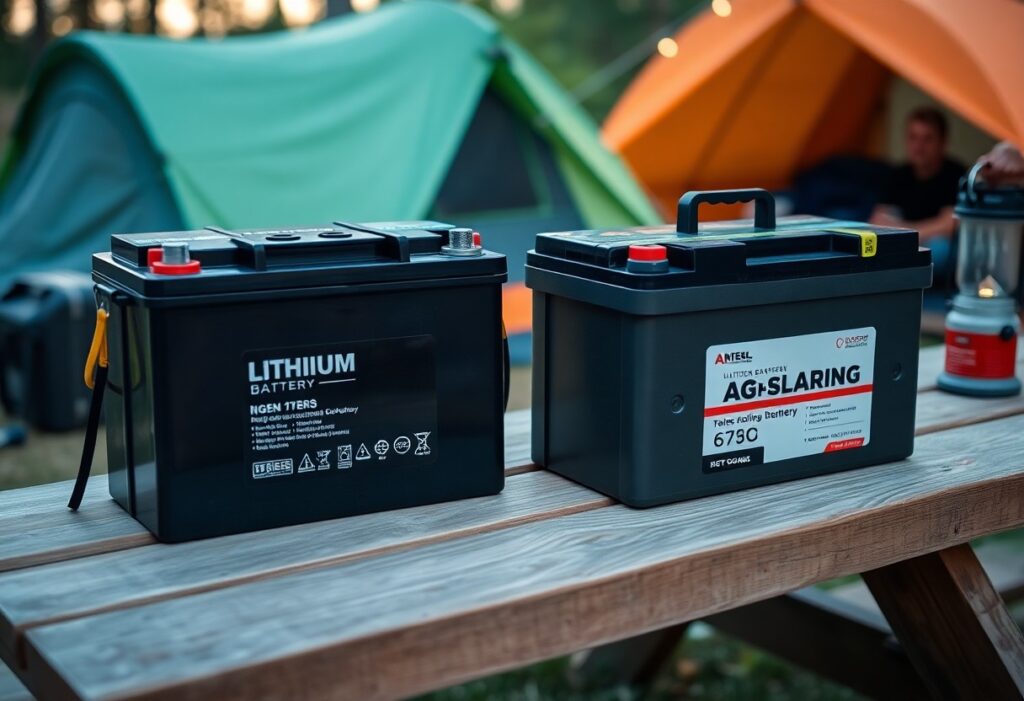
Most campers face the challenge of selecting the right battery for their needs, particularly when weighing the benefits of Lithium versus AGM batteries. Your choice directly impacts your camping experience, from the weight and size of the battery to its lifespan and discharge rates. While Lithium batteries offer faster charging and longer life, AGM batteries may provide a more cost-effective solution with reliable performance. Making an informed decision will ensure your camping rig is always powered and ready for adventure.
Key Takeaways:
- Lithium batteries offer lighter weight and longer lifespans compared to AGM batteries, making them ideal for extended trips.
- AGM batteries are typically more affordable upfront and provide reliable performance in cold temperatures.
- Consider the energy requirements of your camping rig and choose a battery type that meets your specific needs for power and budget.
Understanding Battery Types
When opting for a battery for your camping rig, it’s vital to comprehend the distinctions between both lithium and AGM battery types. Each offers unique benefits and drawbacks that can significantly influence your outdoor experience. Below is a breakdown to help guide your decision-making.
- Weight: Lithium batteries are lighter than AGM.
- Lifespan: Lithium batteries typically last longer.
- Cost: AGM batteries are often cheaper upfront.
- Performance: Lithium batteries perform better in various temperatures.
- Maintenance: AGM batteries require more maintenance.
| Battery Type | Characteristics |
| Lithium | Lighter, longer lifespan, higher cost |
| AGM | Heavier, shorter lifespan, lower cost |
| Efficiency | Lithium is more efficient in energy usage |
| Temperature Performance | Lithium handles extreme temps better |
| Maintenance Level | AGM needs periodic maintenance |
Overview of Lithium Batteries
Lithium batteries excel in energy density and weight, making them a favored choice for serious campers. They can hold more charge while occupying less space and are typically rated for over 2,000 charge cycles. In practical terms, their higher price is often justified by performance and longevity, ensuring you have reliable power throughout your adventures.
Overview of AGM Batteries
AGM batteries, or Absorbed Glass Mat batteries, have been a reliable option for outdoor enthusiasts for years. Their sealed design prevents spills and allows for operation in various orientations. While they are heavier and generally have a shorter lifespan than lithium batteries, their lower initial cost can make them appealing for casual campers.
AGM batteries are often favored for their robustness and ability to deliver reliable power at a lower initial investment. While you lose out on some weight savings, the durability against vibrations and extreme conditions appeals to many campers. These batteries are best suited for those who may not need the extensive range provided by lithium options, making them a practical choice for short trips or less intensive energy demands.
Key Factors to Consider
When deciding between Lithium and AGM batteries for your camping rig, several key factors come into play. Begin by evaluating weight, capacity, and power output, as these aspects will greatly impact your camping experience. Additionally, consider cost and charging times. Each of these variables can dictate the practicality of your battery choice. This assessment will guide you to make an informed decision tailored to your adventures. For more insights, check out this discussion on Lithium vs AGM batteries for camping?
Weight and Portability
The weight of the battery significantly affects the portability of your camping rig. Lithium batteries are typically around 50% lighter than AGM batteries, making them easier to transport and install. This lightweight feature allows for greater flexibility in space-constrained setups or for those who prioritize mobility.
Capacity and Power Output
When assessing capacity and power output, Lithium batteries usually provide a higher energy density than AGM batteries. You’ll find that a 100Ah Lithium battery can often deliver more usable energy compared to an AGM of the same size, which is critical for demanding applications like running appliances or charging devices.
For example, with a Lithium battery, you might use 80-90% of its capacity effectively, whereas AGM batteries generally limit you to around 50%. This translates to longer operation times for your gear without needing frequent recharges, enhancing your overall camping experience. Knowing these differences helps you choose the right battery for your specific power needs.
Cost Analysis
The financial implications of your choice can significantly impact your camping experience. Lithium batteries generally have a higher initial cost, often ranging from $700 to $2,000, whereas AGM batteries typically fall between $100 and $400. That said, a thorough cost analysis includes examining long-term savings, lifespan, and performance under various conditions.
Initial Investment vs. Long-term Savings
Although lithium batteries demand a higher upfront investment, their lifespan of 10 to 15 years can yield substantial savings over time. In contrast, AGM batteries may last around 3 to 5 years, leading to more frequent replacements and associated costs. If you’re planning extensive trips, the longer life and efficiency of lithium batteries often make them a more cost-effective choice in the long run.
Maintenance and Replacement Costs
Maintenance costs vary between lithium and AGM batteries. While lithium batteries require less upkeep and are maintenance-free, AGM batteries may necessitate regular checking and possible replacement after just a few years, adding to your total expenditure.
Considering replacement costs, AGM batteries may need to be replaced multiple times if you camp frequently, often leading to an annual expense of $100 to $200 for battery replacements alone. In contrast, lithium batteries, with their extended lifespan, can reduce your total annual expenses significantly, sometimes even down to $50 per year when amortized over their lifespan. Factor in that lithium batteries can withstand deeper discharges without damaging the cells, and you’ll see how quickly they can pay for themselves in the long haul.
Performance in Different Conditions
When selecting the right battery for your camping rig, understanding how lithium and AGM batteries perform under various conditions is vital. Lithium batteries excel in efficiency and power delivery, especially in colder environments, which can be vital for maintaining your devices and comfort while camping. For an in-depth look at whether you should upgrade your RV batteries, check out this resource.
Temperature Resilience
Temperature Resilience
| Battery Type | Temperature Range |
|---|---|
| Lithium | -4°F to 140°F |
| AGM | 0°F to 120°F |
Discharge Rates
Understanding discharge rates is vital in evaluating battery performance during your camping adventures. Lithium batteries typically offer higher discharge rates, allowing you to draw more current without damage. This means they power your devices more efficiently, especially during high-demand situations, while AGM batteries tend to have a quicker drop-off in performance under load.
Lithium batteries maintain a discharge rate of nearly 100% down to around 20% capacity, making them exceptionally reliable for high-energy draws. In contrast, AGM batteries begin to experience significant performance dips as they approach lower charge levels. This variance in discharge rates results in lithium batteries having a better overall lifespan and user experience, particularly in varied conditions where you may need consistent power levels. Your choice in this aspect can dramatically enhance your camping rig’s functionality and reliability.
Charging Efficiency
Regarding charging efficiency, Lithium batteries shine, typically achieving around 95% efficiency, compared to approximate 80% for AGM batteries. This means you can get more usable power out of a lithium setup, reducing overall charging time and energy waste. For detailed discussions, check out the insights in Lithium battery vs AGM battery : r/RVLiving.
Charge Time Comparisons
| Lithium Battery | 1-4 hours |
| AGM Battery | 6-8 hours |
Cycle Life and Durability
The cycle life of lithium batteries can exceed 5,000 cycles, making them exceptionally durable. In contrast, AGM batteries usually last between 500 to 1,000 cycles, reflecting their shorter lifespan under similar conditions. Choosing lithium means less frequent replacements and reduced long-term costs.
Your camping trips will benefit from the extended lifespan of lithium batteries. They endure harsh conditions better, managing deep discharges without significant damage, which is common in AGM batteries. Consequently, if you seek reliability during longer excursions or in extreme climates, investing in lithium technology pays off in the long run.
Tips for Making the Right Choice
To make the optimal choice between lithium and AGM batteries for your camping rig, consider the following:
- Assess your power needs carefully.
- Evaluate your camping environment for temperature and terrain.
- Factor in the cost and longevity of the battery.
- Examine the weight and size constraints of your setup.
Knowing these aspects will guide you to the right battery suited for your adventures.
Assessing Your Power Needs
Understanding your power needs is necessary before selecting a battery. Calculate the total watt-hours required by your devices, accounting for usage duration and peak demands. For instance, if your camping rig draws 500 watts for five hours, you’ll need a battery that can support at least 2,500 watt-hours. It’s prudent to add a buffer for unforeseen energy consumption and peaks in demand, ensuring uninterrupted power during your camping trips.
Evaluating Your Camping Environment
Your camping environment plays a significant role in battery performance. Extreme temperatures can affect efficiency and longevity; for example, lithium batteries tend to perform better in cold conditions than AGM batteries. Additionally, consider the terrain-bumpy roads may warrant shock-resistant battery designs. Locations with frequent discharges may benefit from the low self-discharge rates of lithium batteries, ensuring reliable power when you need it most.
Conclusion
On the whole, choosing between lithium and AGM batteries for your camping rig depends on your specific needs and preferences. If you prioritize lightweight, compact power with fast charging capabilities, lithium may be your best option. Conversely, if you desire cost-effectiveness and better performance in colder temperatures, AGM could suit your requirements better. Assess your camping style, energy demands, and budget to make an informed decision that enhances your outdoor experience.